Notes on Freedom

Category: Identity

‘Just call me “ze”.’ The trouble with gender-neutral identities
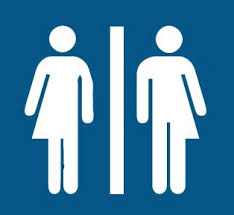
Genderimage A friend’s 14-year-old son goes to a south London comprehensive. Two of his classmates identify as neither male or female: one has two personalities, between which he alternates; the other is a ‘non-binary non-cis-gendered woman’.

There is nothing wrong, of course, with people going against their gender or primarily considering themselves a person or a human being. Nor is there anything wrong with androgyny. There is more freedom than ever to be or look androdynous: women can wear suits, men can wear sarongs and jewellery, with hair as short or long as you like.

But the gender-neutral identity is quite different. It is not an indifference to categories, just being yourself, ignoring demands to fit in with models or roles. Instead, there is an obsession with categories (gender neutral, genderqueer, gender fluid, gender questioning, agender, bigender, or many many others). The quest for the right category is the quest to establish a basis for the self. Your identity box and pronoun become as important as your name. One formerly gender neutral man introduces himself: ‘Hi, my name is Sam. My pronouns are “he” and “him”, how about you?’

This means that the formation of the self plays out not in an interior world, nor in relation to close others, but in relation to reified categories that a person has invented or found on the internet. People go in search of an identity box that ‘fits’, in the way that in the past they might have sought a religion or vocation.

When Facebook announced 71 different gender categories for UK users, an adviser said that Facebook ‘will finally allow thousands of people to describe themselves as they are now’ and ‘allow future generation of kids to become truly comfortable in their own skins.’ Your feeling in your own skin; a website’s drop-down menu: there is no difference.

Traditional social categories, such as man or woman, or nationality or class, were based on some generally accepted physical distinction or division within social structure. The new categories, by contrast, exist apart from someone’s position in society or the social relations they enter into, as well as their physical reality. Your identity box can be independent of your appearance: you can identify as black though biologically white (as with Rachel Dolezal, who claims to be ‘trans black’); or identify as a woman though you have the body of a man. Your identity category can even be independent of your relationships, with one woman saying that she identifies as queer while in a long-term relationship with a man.

Gender-neutral websites always advise on never assuming someone’s gender, never assuming anything about someone on the basis of how they look or who they are with. The identity box is only incidentally related to social or biological reality. The box is both arbitrary – someone can choose anything they want – but also strangely naturalised as if they haven’t chosen it at all. Therefore, it is a private relationship with some sort of external determination.

Gender neutral identities involve a kind of grating at the social, an objection to being touched by anything social or universal in content. After all, a regular pronoun describes an individual as something general: to be called ‘he’ is to say that this person, Tom, is something universal, a man. The new identities express a dislike at being part of any general group or category, at being touched or judged by frameworks that are commonly accepted. One gender-neutral student said:

Every time someone used ‘she’ or ‘her’ to refer to me, it made this little tick in my head. Kind of nails-on-a-chalkboard is another way you can describe it. It just felt wrong. It was like, “Who are you talking to?”‘

The gender-neutral pronoun is a violation of language and the meaning of words. To ask other people to use ‘they’ or ‘it’ rather than ‘he’ or ‘she’ is to make them twist their tougues into unnatural shapes, and use words in ways that violate their actual meaning. A person is called either a plural, or an object. It is worse with invented pronouns, such as xe/xem, zie/hir, e/em, fae/faer, and co/cos, because people do not understand what they mean. People are asked to use words that don’t mean anything.

(The problems are accentuated in gendered languages such as French or German, where things such as job positions are also gendered. A Humbolt university professor uses ‘x’ instead of gendered endings, replacing Professor (male) or Professorin (female) with ‘Professx’. Another man complains that his gender-neutral German pronouns are not being understood: ‘By using “xier/sier” most people think that I try to say “sie” with a bad German pronunciation, and if I use “nin” (although I quite like the sound of it), no one understands anything.’)

The pronoun-based identity is something that can only happen in public, through requesting a particular, unnatural treatment from the world. You find yourself by asking people to call you something different. One man says: ‘For two years I used “ze” and “hir” pronouns, and it’s kind of a process of trying them out and having other people try them out to see how it feels and sounds.’

A man (not a ‘cis-man’, just a man) can be relatively independent of his pronoun. His pronoun can be incidental to him; he does not think about it, which means that the individual is free to go his own way and do his own thing. In accepting a general category, the individual can go their own way as something distinct from this. Indeed, early philosophies of individual independence encouraged an indifference to the outside world: Stoicism, for example, recommended remaining steady on your inner axis through a cultivated immunity to anything anyone said about you or anything that happened.

The gender-neutral person has no point of independence, no point apart from the world on which to stand. They are their identity box; they are their pronoun. And the content of this identity box is nothing but the violation of the commonly accepted category. It is an identity founded on the negation of the categories of social life, declaring them ‘binary’ and null and void.

Therefore, the gender-neutral identity means the effacement of the independent individual, as well as the universal social category – both of which are collapsed into the drop-down menu and the pronoun ‘ze’.

Josie Appleton is talking about ‘Self, society and alienation’ at The Academy on 15 and 16 July.
Microaggressions – fostering the alienated self

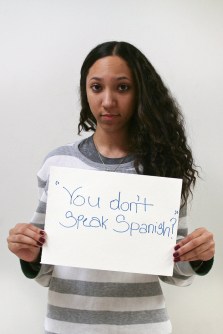
enhanced-buzz-1002-1386285201-29-2The current trend of identifying ‘micro-aggressions’ is not about social categories of exploitation or dominance. Nor is it just about personal touchiness or sensitivity. Instead, it is a prism through which social life and the world is experienced, as something set against and hostile towards the self.

This was shown in a perceptive satire of microaggressions by University of Michigan student, Omar Mahmood, in character as ‘womyn of color’. The satire captures how the experience of aggression structures every aspect of a person’s relations and environment. Even the falling snow: ‘The blistering cold did not turn my eyes from all the white privilege falling around me.’ The ‘womyn’ slipped over on to some steps and was approached by ‘a white cis-gendered hetero upper-class man’; she detected the ‘patronising sneer’ behind his words, ‘Cold, isn’t it?’; and when the man offered her his hand she observed ‘a manifestation of the patriarchy patronizing me’. In the end, the womyn realised that it was not about her colour but her left handedness (an awareness triggered by the cis-man’s comment, ‘I was just trying to do the right thing!’):

The right thing… The right thing… I became so aware at that moment of the left hand that I had thrust out before falling, and suddenly my humanity was reduced to my handydnyss. The words rang in my eardrums, and my blood throbbed.

The satire captures the arbitrary nature of the categories being employed. Categories such as ‘WOC/cis-male-hetero’ are detached from social structure: they do not represent groups or their relations, any more than does left-handedness or snow. Some of these categories are taken from past relations of inequality, but they exist as utterly transformed (which is why they use different terms and are described in an often unrecognisable jargon).

Instead, micro-aggressions represent the polarisation of everyday relations. The offer of a hand, or a consoling comment, is experienced as an act of hostility. In micro-aggressions, to be black, or female, or gay lacks much positive significance; there is little celebration of black or gay pride, or feminist sisterhood. The role of the category (of women, colour, handydnyss) is to give form to the feeling that social relations undo us, are aggressive. That others are set counter to us.

A glance, a question, the direction of someone’s gaze is experienced as a devaluation or an aggression for the individual. One Latino student complains about the way another student ‘noticed my Frida Khalo lighter and was more concerned about her appearance than the actual painting on it’, which was representative of ‘white supremacy at work’ and the exclipse of Mexican art by Eurocentric art. Another student complains that cashiers are not sufficiently cheery with them, perceiving a greater cheeriness with white people before and after them in the queue.

Often, the reality of the situation shines through: you can see the ‘aggressive’ person is just being curious, or making conversation, or making a guess, or a mistake. They ask why you don’t speak Spanish or whether you can read a Japanese character. They call you Jaime Garcia rather than Jaime Rodriguez. A person is offering you their hand and the gesture is transformed into an aggressive act, only because everyday sociality is experienced as a form of hostility.

It is sometimes the case that genuine acts of racism and sexism get called microaggressions, but these are in the minority. The essence of the category (which is why it has a new name) is the individual experience of dissonance with the world. This is why many of the complaints are highly subjective: you can sense a person’s upset and anger, but you cannot understand what the problem was. Why is it a problem that someone said ‘you do not look like the type of person that is interested in watching sports’? Why is this an invalidation?

Groups of all kinds are experienced as toxic, hostile, uncomfortable and painful, even those of one’s own identity category. One gay black woman complained that:

The queer community on this campus can be so incredibly toxic & policing, especially for womxn of color. Identifying as queer is such a hard experience on this campus because of all the heavy internalizations of queerphobia, but not feeling able to sit fully and comfortably with my qwoc self in queer/qpoc spaces is the most painful.

It is notable that the category of micro-aggression is authored by the victim. In effect, they are authoring the narrative of their own non-subjectivity, and the cis-hetero-male aggressor is constructed as a part in this narrative. The cis-man is holding his hands up, saying hey, I was only trying to help, I didn’t mean anything by it.

This means that the category of microaggression doesn’t only express the individual experience of dissonance with the world; it also actively fosters it. Experiencing the world in this way means that someone becomes attached to their alienated condition. A person starts to cultivate dissonance, to almost to revel in their non-identity with the world. The self becomes attached to the experience of alienation; it creates itself as alienated.

This new basis of identity is the reverse of the classical individual, who was based on the extent to which a person distinguished themselves. The personalities of ancient heroes were defined in the extent to which they left established boundaries, and went out seeking voyages, quests, ordeals. By contrast, the micro-aggressed self is defined in terms of what has been inflicted upon it. Therefore, they stake themselves upon their unfreedom, upon their object-character to the wills of others.

Yet of course, this is not an individual at all, but the eclipse of individuality. The same act that estranges the individual from the social, also estranges a person from themselves, from their individual abilities and qualities. Someone becomes not Carol or Jane, a specific individual with a specific inner life, but a ‘qwoc self’, with the self as a composite of queer-woman-of-colour-etc etc. As the satire put it: ‘Suddenly my humanity was reduced to my handydnyss’. Such a person is, at base, uncomfortable – with others, with themselves.

Therefore, the new phenomenon of micro-aggressions reflects neither exclusion nor oppression; nor is it merely the over-sensitivity of people who must be told to buck up. Instead, it reflects a new social structure; a new alienation in social relations, which is reaching into the most everyday encounters and people’s experience of their own personalities.

The solution can only be in combating these structures, and posing against them the truth and innocence of the everyday encounter, the person who is just offering you a hand up or asking about you because they are curious. We must also affirm the individual who is comfortable with themselves, who is not a category but a person, and who is not glowering and counting offences but throwing themselves into the curiousities and delights of our varied social world.

Gay/bi/top/bottom…fake identities and the structuring of public life

One of the first questions gay men ask each other is: ‘Are you a top or a bottom?’ A person’s preference of sexual position becomes what one is: a top, or a bottom. The question of subjective preference in the context of a relationship becomes hardened into different categories of people – as if, one gay man said, ‘two entirely different species of gay male humans’.

A similar process is at work in many other areas of life. Indeed, it is such stereotyped categories of identity which to a large extent provide the structure for social life now. These categories both form personal identity, group individuals together, and structure their relations to one another and to other groups.

We can see this in the process of electoral campaigning: there is a pink battle bus for women, an Operation Black Vote, Operation Disabled Vote, Operation Muslim vote, and so on. This is the way in which an electorate is categorised and structured: not Labour v Tory, Middle England v Welsh pit towns; not constituencies of interest but categories of individuals.

With the end of the political party and association, some social theorists imagined that social life would be without structure. Zygmunt Bauman talked about the endless ‘fluidity’ of life, individuals moving into temporary and structureless connections with others: his ‘liquid modernity’ is formless and insubstantial. Jean Baudrillard imagined the post-political society as like a ‘mass’, a silent, expressionless and immobile lump which absorbed all meaning.

Yet what has happened is not this, but the emergence of a new social structure based on the category. Society is becoming an interlocking series of boxes, which break down into endless subdivisions. A person is male/female; gay/straight/bi/BDSM; top/bottom; versatile top/total top…and so on.

These categories have a rigid, caste-like quality. Even if you choose to be gay or straight, Muslim or non-Muslim, there is a way in which the category takes on a life of its own and seems to structure you. A study of the relations of top and bottom quoted men saying: ‘I sort of fell into this image of myself as being a very aggressive bottom’; ‘There’s a mindset about being a top’; ‘I hate to say it, but I’m a bottom … I don’t like to be identified like that because I feel it turns me into something all the way from my feet up to my head.’

Having chosen a box, they found that the box then ‘turns me into something’; it took away some of their individuality and made them a stereotype of a person, as well as determining their relations to others along stereotyped lines. The identity category, like the old social structures of caste, or feudal estate, is experienced as something foreign and external to the individual, as determining them.

This is quite different to the relationship of the individual to a  political party or association of which they are a member. As a party member, subjective interests are channelled into social forms, and in turn structured by them. An individual is part of the living body that is the association: one makes and is made by it. In the life of a voluntary association, the individual and the social group are in constant relation, forged by one another.

The category is more like a box: a box as an external form within which the individuals sit as separate items. It is a social form based not on dynamic interrelation between individuals, but on some common quality possessed by them: a genus. These categories have the appearance of something very private and personal to the individual – their sexuality or preference – but in fact they are ossified and hardened, and take over the inner life.

As part of a category, one’s actual personal and subjective life is eclipsed. You start to become your category, and to relate to others not as yourself but through it.

It is striking how the different identity groups are so hostile towards one another. The gay/lesbian/bi/trans community is taken up with fractious bickering between the different sections; a jostling for priority, and arguments about who is ‘included’ or ‘excluded’ in any particular initiative.

This can even reach the level of ‘trans’ people demanding that lesbians ‘accept them as sexual partners’; and lesbian feminists in turn defending the ‘safe space’ of their toilets against these trans invaders. The question of who has sex with whom, and which toilets people use, takes the strange form of a negotiation between tribes, as if sex again is a matter of endogamy or exogamy. There even appears to be a certain hostility between ‘tops’ and ‘bottoms’.

This hostility has a different quality to past relations of social antagonism between, say, different professions, classes, or religious sects. In these cases, the antagonism was the consequence of the internal life of the association – it reflected the extent to which the interests of the association came into conflict with those of others.

By contrast, today’s identity categories lack this genuine internal life and real social existence: they are not an association but an aggregation of individuals. In a way, therefore, a category only comes to life in conflict with opposing categories. What one is is therefore defined primarily in the moment of conflict, set against what one is not.

A person is increasingly only really ‘trans’ or ‘Muslim’ when they are complaining about Islamophobia or the ‘lack of trans representation’. Only in the moment of opposition is a category-identity constituted – albeit in a shallow and stereotyped fashion – which is why these conflicts seem to be sought out as an opportunity for self-constitution.

This explains why individuals who have almost nothing to complain about spend all their time complaining. People have an opportunity to be who they want, love who they want, follow the religion they want – yet they seem to be prisoners to their labels, and locked in relations of mutual hostility with different labels.

The proper war now is not between the fake categories of identity, but of people against the categories. ‘We have to stop letting these titles wear us’ writes one gay man; another calls the divisions ‘stupid’: ‘whatever happened to love, chemistry and falling for a person?’

This is a claim both to be yourself, and to form meaningful relationships and associations with others. The war of people against the stereotyped and boxed forms of social identity would be the salvation of both the individual and the collective association – not to mention romance.